
2025 ICN-WBG Competition Advocacy Contest
The International Competition Network and the World Bank Group are pleased to announce the launch of the 2025 Competition Advocacy Contest, which follows the successful experience of the previous ten joint editions.
We are looking for success stories from competition agencies, other government bodies or non-governmental organizations that demonstrate the tangible results of competition advocacy regarding:
Theme 1 – Supporting resilient and competitive value chains to enable private investment, jobs, and consumer welfare
Theme 2 – Embedding competition principles in policies to manage state assets: SOEs, privatization and public private partnerships
Theme 3 – Enhancing public procurement and curbing bid rigging for government savings
Theme 4 – Advancing competition through public-private dialogue
The deadline for submissions is February 14, 2025.
For more information and details on how to apply please visit the following web-page:
https://www.worldbank.org/en/events/2024/12/06/competition-advocacy-contest-2025
We welcome your participation!
Competitiveness Unit, World Bank Group, and the Italian Competition Authority on behalf of the ICN Advocacy Working Group Co-Chairs


ICN Kick-Off Call 2024

ICN “Kick-Off Call”
Hear from the ICN Working Groups on New Work Products and
How to Get Involved in this Year’s Projects
Wednesday, September 18, 2024
08:00–09:00 (Ottawa)/14:00–15:00 (Bonn)
ICN working groups and project teams will present new work products, work plans for 2024/2025, ICN events, and opportunities to participate in this year’s projects.

ICN Cartel Workshop 2024
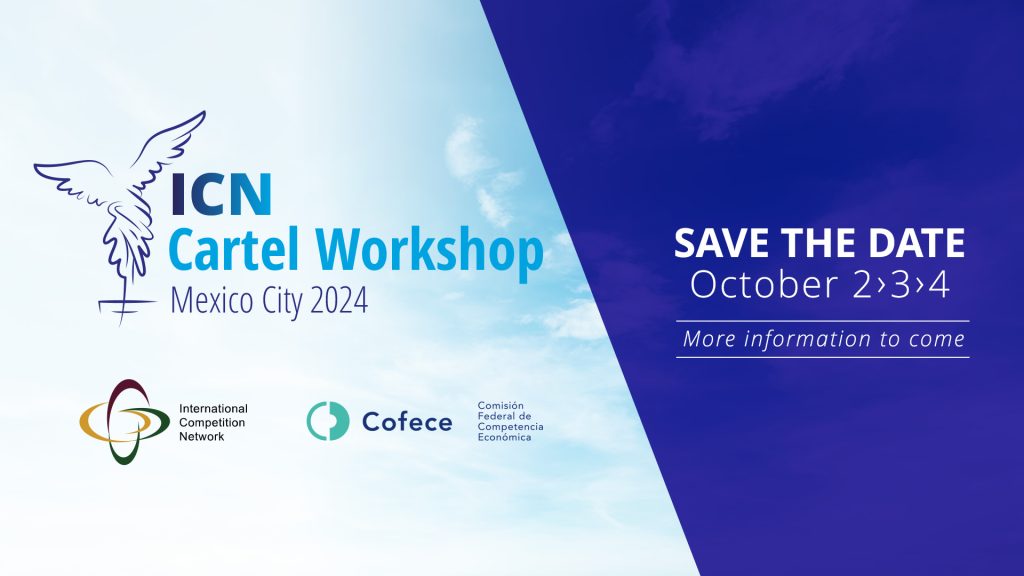
The workshop was hosted by the Mexican Federal Economic Competition Commission (Cofece) from 2-4 October 2024 in Mexico City at the Barceló Reforma México Hotel.
This year’s event, entitled The Future of the Fight Against Cartel Agreements explored the challenges that competition agencies are facing and will face in the near future regarding the detection, investigation and enforcement of the law against cartels. The workshop featured both technical and practical sessions covering topics ranging from proactive detection tools, the impact of new technologies on collusion and the future of international cooperation in cartel enforcement.
The press release is available here.

ICN Merger Workshop
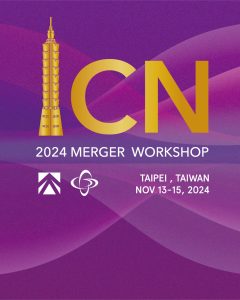
ICN 2024 MERGER WORKSHOP
13-15 November 2024
TAIPEI, TAIWAN
The International Competition Network (ICN) Merger Workshop was held by the Taiwan Fair Trade Commission at the Regent Hotel in Taipei, Taiwan, from 13 to 15 November 2024.
The two-and-a-half-day workshop offered opportunities for national competition authorities (NCAs) and non-governmental advisors (NGAs) to discuss and exchange experiences on highly topical merger issues, including potential/dynamic competition, innovation theories of harm in both horizontal and non-horizontal mergers as well as other non-price parameters of competition. Given the increasingly dynamic nature of competition enforcement in digital and other sectors, these topics are more pertinent than ever.
Participants had the opportunity to discuss in an interactive setting various hypothetical cases (e.g. theories of harm, remedies, investigative tools), to elaborate on draft Merger Working Group products and discuss, among other topics, procedural aspects of merger investigations.
More information and videos are available here.

ICN in brief 2024/25
Check the 2024/25 ICN projects and get involved.
More detailed information and additional projects can be found in the ICN Working Group work plans available on the Working Group subpages along with the relevant contact information.
ICN Sustainability Workshop
Join Us for the ICN Workshop on Competition and Sustainable Development
We are excited to announce the first ICN workshop on “The Role of Competition in Supporting Sustainable Development Goals,” which will be organized by the French Autorité de la concurrence and held online from July 2-3, 2024.
Event Overview
This workshop will explore the crucial role that competition plays in achieving sustainable development goals. It will provide a platform for experts, heads of agencies, and non-governmental advisors (NGAs) to discuss and share insights on integrating sustainability considerations into competition law assessments.
Agenda Highlights
Day One accessible here: Open to ICN Members
1:00 pm CEST: Introductory remarks by President Benoît Coeuré
1:15 pm – 2:15 pm CEST: Panel Discussion 1: “Sustainability considerations in competition law assessments: competition agencies’ mandate and where to draw the line.” This session will feature a moderator and four speakers who will delve into the mandates of competition agencies and the boundaries of sustainability considerations in legal assessments.
2:15 pm – 3:15 pm CEST: Panel Discussion 2: “How to effectively address behaviors that positively or negatively affect sustainability: advocacy, ex ante guidance, and the suitability of traditional enforcement tools.” This panel will discuss the practical tools and strategies for addressing sustainability-related behaviors.
3:15 pm – 3:30 pm CEST: Closing remarks by ICN Chair Andreas Mundt
Day Two: Agencies Only
This day will be dedicated to internal discussions among agency experts, focusing on practical issues and challenges related to sustainability in their day-to-day work. Topics will include capacity building, advocacy, ex ante guidance, and enforcement.
If you have any questions regarding the event or your agency is willing to share relevant experience on these topics, please feel free to contact us at [email protected]
We look forward to your participation in this event as we explore the intersection of competition and sustainability to support global development goals.
ICN Steering Group confirms Andrea Marván, COFECE Mexico, as new ICN Vice Chair
ICN Steering Group confirms Andrea Marván, COFECE Mexico, as new ICN Vice Chair

Andrea Marván Saltiel, Chair of the Mexican Federal Economic Competition Commission (COFECE), has been newly appointed as one of two ICN Steering Group Vice Chairs at the ICN Annual Conference in Brazil in May 2024 alongside Lina Khan, Chair of the US FTC. In this capacity, Andrea will focus on emerging competition issues.
The ICN would like to thank Sia Aik Kor for her commitment and leadership as former ICN Vice Chair.
Comment les codes bonus casino ont évolué en France selon Casinara
L’histoire des codes bonus dans les casinos en ligne français est indissociable de l’évolution réglementaire du secteur. Pendant longtemps, les opérateurs offshore proposaient des offres promotionnelles sans aucun cadre légal, laissant les joueurs dans une zone grise juridique. Depuis l’ouverture partielle du marché en 2010, les pratiques commerciales des casinos ont considérablement changé, et les codes bonus en particulier ont suivi une trajectoire propre, façonnée par les contraintes légales, les attentes des joueurs et les stratégies des plateformes. Comprendre cette évolution permet de mieux saisir pourquoi les offres disponibles aujourd’hui sont si différentes de celles qui circulaient il y a une décennie.
L’avant-2010 : une époque de promotions sans frontières
Avant la loi du 12 mai 2010, dite loi Hortefeux, qui a ouvert et régulé le marché des jeux en ligne en France, les casinos opéraient principalement depuis des juridictions comme Malte, Gibraltar ou les Antilles. Dans ce contexte, les codes bonus étaient des outils marketing extrêmement agressifs. Un joueur français pouvait entrer un code promotionnel pour obtenir un bonus de bienvenue pouvant atteindre 200 % à 400 % du dépôt initial, parfois sans conditions de mise clairement définies.
Ces pratiques étaient courantes parce qu’aucune autorité française ne pouvait les encadrer. Les opérateurs rivalisaient d’inventivité : codes bonus pour les anniversaires, pour les rechargements hebdomadaires, pour le parrainage d’amis, ou encore des codes distribués via des forums spécialisés. Le joueur collectionnait ces codes comme des coupons de réduction, en profitant d’un marché non régulé où la concurrence était féroce. En l’absence de régulation nationale, certains opérateurs utilisaient ces bonus comme des instruments de rétention parfois trompeurs, avec des exigences de mise dissimulées dans des conditions générales rédigées en anglais ou dans une langue étrangère.
La régulation de 2010 et ses effets immédiats sur les promotions
La création de l’Autorité de Régulation des Jeux En Ligne (ARJEL) en 2010 a marqué un tournant décisif. L’ARJEL, devenue ANJ (Autorité Nationale des Jeux) en 2020 après la fusion avec la Française des Jeux et le PMU, a imposé des standards de transparence inédits. Les opérateurs agréés ont été contraints de présenter leurs offres promotionnelles de manière claire, avec des conditions de mise explicites, des durées de validité précises et des plafonds de gains liés aux bonus.
Concrètement, les codes bonus ont commencé à perdre de leur caractère “magique” pour devenir des instruments commerciaux normalisés. Les montants ont été revus à la baisse : là où un code pouvait autrefois débloquer 500 euros de bonus, les offres post-régulation se limitaient souvent à 100 ou 150 euros, assortis de conditions de mise de 20 à 35 fois le montant du bonus. Ce recadrage a certes protégé les joueurs contre certaines pratiques abusives, mais il a également rendu le marché français moins attractif que les marchés offshore aux yeux de certains joueurs expérimentés.
Il faut noter que l’ARJEL n’a jamais interdit les codes bonus en tant que tels, mais elle a exigé que tout avantage promotionnel soit mentionné dans les conditions générales déposées auprès de l’autorité. Cette obligation de dépôt préalable a ralenti la capacité des opérateurs à lancer des promotions flash ou des codes temporaires, ce qui a modifié profondément la dynamique du secteur.
L’évolution des formats entre 2015 et 2023
La période 2015-2023 a été marquée par une sophistication croissante des mécaniques de bonus. Les codes simples de type “BONUS100” ont progressivement laissé place à des systèmes plus complexes : codes liés à des événements sportifs, codes réservés aux membres d’un programme de fidélité, ou encore codes générés dynamiquement pour chaque joueur selon son historique de jeu. Cette personnalisation, rendue possible par les avancées en matière d’analyse de données, a transformé le code bonus d’un outil générique en un levier de fidélisation ciblé.
Des plateformes spécialisées dans la comparaison des offres ont émergé durant cette période pour aider les joueurs à s’y retrouver dans la multitude de promotions disponibles. C’est dans ce contexte que des ressources comme http://casinara.com/codes-bonus-casino/ ont pris de l’importance, en centralisant les informations sur les codes actifs et en expliquant les conditions associées à chaque offre, ce qui représentait un véritable service éditorial pour les joueurs cherchant à comparer les promotions disponibles sur différentes plateformes.
Sur le plan réglementaire, l’ANJ a également renforcé les exigences en matière de jeu responsable à partir de 2020. Désormais, les opérateurs doivent s’assurer que les codes bonus ne sont pas proposés à des joueurs ayant activé des outils d’auto-exclusion ou des limites de dépôt. Cette contrainte technique a nécessité des investissements importants dans les systèmes de gestion des promotions, et certains petits opérateurs ont renoncé aux codes bonus pour cette raison.
Parallèlement, le marché a vu apparaître des codes bonus sans dépôt, dits “no deposit”. Ces codes permettent d’obtenir un crédit de jeu ou des tours gratuits sans effectuer de versement préalable. Bien que leur valeur soit généralement faible — entre 5 et 20 euros — ils ont connu un succès notable car ils permettent aux nouveaux joueurs de tester une plateforme sans risque financier immédiat. Selon les données publiées par l’ANJ dans son rapport annuel 2022, le nombre de nouveaux comptes ouverts sur des plateformes agréées a augmenté de 18 % entre 2019 et 2022, une tendance que certains analystes attribuent en partie à la démocratisation de ces offres d’essai sans dépôt.
Les tendances actuelles et les défis réglementaires à venir
Aujourd’hui, les codes bonus dans les casinos en ligne accessibles depuis la France se déclinent en plusieurs catégories bien distinctes. On distingue les codes de bienvenue pour les nouveaux inscrits, les codes de rechargement pour les joueurs existants, les codes liés à des événements spécifiques comme les tournois ou les jackpots progressifs, et enfin les codes exclusifs distribués via des partenaires éditoriaux ou des affiliés agréés. Chaque catégorie obéit à des règles différentes en termes de conditions de mise et d’éligibilité.
L’un des défis majeurs pour les opérateurs agréés en France reste la concurrence des sites non licenciés. Malgré les efforts de l’ANJ pour bloquer l’accès à ces plateformes — plus de 500 sites ont été bloqués entre 2010 et 2023 — les joueurs techniquement avertis continuent d’accéder à des offres offshore via des VPN. Ces sites proposent des codes bonus sans les contraintes réglementaires françaises, ce qui crée une distorsion de concurrence difficile à résoudre sans une harmonisation européenne plus poussée.
La question de la publicité pour les codes bonus est également au cœur des débats actuels. Depuis 2021, l’ANJ a durci ses positions sur la publicité ciblant les jeunes adultes et les personnes vulnérables. Les opérateurs doivent désormais obtenir une validation préalable de leurs campagnes promotionnelles incluant des codes bonus avant de les diffuser sur les réseaux sociaux ou les plateformes de streaming. Cette mesure a eu pour effet de réduire la visibilité de certaines offres, mais elle a aussi poussé les opérateurs à investir davantage dans des canaux éditoriaux plus qualitatifs, comme les sites de comparaison ou les guides spécialisés.
Du côté technologique, l’intégration des codes bonus dans les applications mobiles a modifié les usages. En 2023, plus de 60 % des sessions de jeu en ligne en France se déroulent sur smartphone selon les estimations sectorielles. Les codes sont désormais souvent remplacés par des liens de promotion activés automatiquement lors de l’inscription via une application, ce qui rend la notion même de “code” de plus en plus abstraite pour les joueurs. Certains opérateurs ont abandonné le système de codes alphanumériques au profit de boutons d’activation intégrés directement dans l’interface, simplifiant l’expérience utilisateur mais réduisant la dimension “chasse au trésor” qui faisait partie du charme originel des codes bonus.
L’évolution des codes bonus casino en France reflète en définitive une maturation progressive du marché. Partis d’un environnement non régulé où tout était permis, ces outils promotionnels ont été progressivement encadrés, normalisés, puis sophistiqués pour s’adapter aux exigences légales et aux attentes d’une clientèle plus informée. Si la régulation a parfois été perçue comme un frein à l’innovation commerciale, elle a surtout contribué à assainir un secteur qui en avait besoin, en plaçant la transparence et la protection du joueur au centre des pratiques promotionnelles. Les prochaines années, marquées par l’essor de l’intelligence artificielle et la personnalisation poussée des offres, promettent une nouvelle transformation de ces mécaniques, dans un cadre réglementaire qui devra lui aussi s’adapter en conséquence.
2024 ICN Annual Conference in Sauipe, Brazil
The 23rd Annual Conference of the International Competition Network (ICN) was hosted by the Brazilian Administrative Council for Economic Defense (CADE) in Sauipe, Brazil from 14 to 17 May 2024.
At the conference, participants shared experiences and engaged in discussions in the plenaries and breakout sessions organised by the ICN working groups. Special sessions were dedicated to new developments in the field of artificial intelligence as well as the topic of state-owned enterprises for which the ICN had also invited the OECD and UNCTAD to participate.
For further information on the ICN Annual Conference, please visit the conference website (https://icn2024sauipe.cade.gov.br/). The recordings of the plenary sessions are available here without prior registration.
The ICN Statement of Achievement 2023-2024 is available here.

ICN in brief 2023/24
Check the 2023/24 ICN projects and get involved.
More detailed information and additional projects can be found in the ICN Working Group work plans available on the Working Group subpages along with the relevant contact information.