2024 ICN Advocacy Workshop
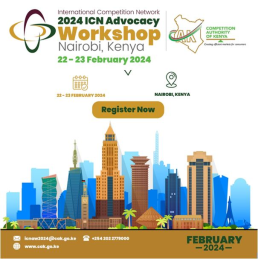
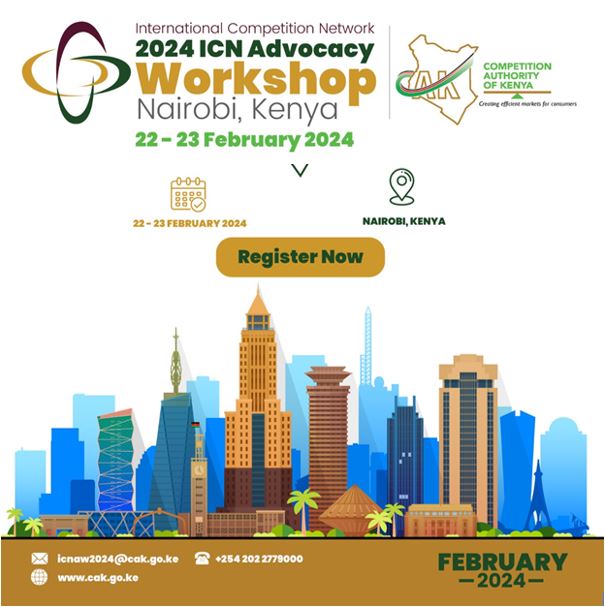
The ICN Advocacy Workshop will be hosted by the Competition Authority of Kenya in Nairobi from 22-23 February 2024.
The website is online, please click on the e-shot below.
How Casino Payout Rates Are Calculated and Verified, a Casimatic Overview
Understanding how casinos report their payout rates requires more than accepting a percentage figure at face value. Return to Player (RTP) statistics are among the most cited numbers in the gambling industry, yet the methodology behind them is frequently misunderstood by players and occasionally obscured by operators. A payout rate expressed as 96% does not mean a player will receive 96 cents back for every dollar wagered during a single session — it describes a theoretical long-run average calculated across millions of game rounds. The distinction matters enormously for anyone trying to evaluate the genuine value of a casino’s offering.
The Mathematics Behind RTP Calculations
Return to Player percentages originate at the game development stage, not at the casino level. Software providers such as NetEnt, Microgaming, Playtech, and Evolution Gaming program the mathematical models that determine how a game pays out over an extended sequence of play. For slot machines, RTP is derived from the game’s probability distribution — every symbol combination, its frequency of appearance, and its associated payout value are factored into a weighted formula. The sum of all possible outcomes multiplied by their respective probabilities, divided by the total amount wagered per spin, produces the theoretical RTP figure.
For table games, the calculation is more straightforward because the rules are fixed and the probability space is finite. European Roulette, for instance, has a house edge of 2.7%, which translates to an RTP of 97.3%. This figure is mathematically provable because the wheel contains 37 pockets and the standard single-number bet pays 35 to 1. Blackjack RTP can exceed 99.5% under optimal basic strategy, though it varies depending on the specific rule set — number of decks, dealer standing rules on soft 17, and availability of surrender all affect the final figure. These calculations have been standardized in academic literature since the mid-twentieth century and are not subject to operator manipulation at the software level.
Volatility, sometimes called variance, is a separate metric that interacts with RTP in ways players frequently conflate. A high-volatility slot may carry an RTP of 96.5% but deliver that return through infrequent large wins rather than consistent small payouts. Two games with identical RTPs can produce radically different player experiences depending on their hit frequency and maximum win potential. Game developers typically publish volatility classifications alongside RTP figures in their technical documentation, though casinos do not always surface this information prominently.
Independent Testing and Regulatory Verification
The credibility of any published RTP figure depends entirely on the verification process behind it. Regulatory bodies in major licensing jurisdictions require that games be tested by accredited independent laboratories before they are approved for real-money play. The most recognized testing organizations include eCOGRA (established in 2003 and headquartered in London), GLI (Gaming Laboratories International, founded in 1989 in the United States), BMM Testlabs, and iTech Labs. These organizations receive the game’s source code and mathematical model from the developer, run extensive simulation cycles — typically in the range of one billion to ten billion rounds — and verify that the observed output matches the theoretical RTP within an acceptable statistical tolerance.
In the United Kingdom, the Gambling Commission requires all licensed operators to publish game RTPs and mandates that the actual return over a defined period does not deviate from the certified figure by more than a specified margin. The Malta Gaming Authority, one of the most widely recognized offshore licensing bodies, enforces similar requirements under its Player Protection Directive. Gibraltar’s Regulatory Authority and the Isle of Man Gambling Supervision Commission apply comparable standards. The practical consequence is that a casino operating under a reputable license cannot simply adjust a game’s payout rate without triggering a compliance breach that would jeopardize its license.
Actual RTP monitoring occurs at two levels. First, the game itself contains a certified mathematical engine that cannot be altered by the casino operator — the software runs on the provider’s servers in most contemporary arrangements, particularly under the remote gaming server model that became dominant after 2010. Second, regulators and independent auditors conduct periodic reviews of actual payout data reported by operators. eCOGRA, for example, publishes monthly payout reports for casinos that subscribe to its certification program, listing the aggregate RTP across all games for that period. These figures represent real player outcomes rather than theoretical models and typically cluster within one to two percentage points of the certified theoretical values when sample sizes are large enough.
How Operators Influence Effective Payout Rates
While operators cannot alter the certified RTP of individual games, they exercise meaningful influence over a player’s effective return through game selection and promotional structures. Casinos curate their game libraries and can choose to offer versions of slots with different RTP configurations — many providers release the same title in multiple variants with RTPs ranging from 94% to 97%, allowing operators to select the version that suits their margin targets. This practice is legal under most licensing regimes as long as the published RTP matches the configured version, but it means that the same game title may pay differently across different platforms.
Bonus structures represent another layer of complexity. A welcome bonus with a 40x wagering requirement attached to a 100% match effectively dilutes the player’s theoretical return, because a significant portion of the bonus funds must be cycled through games before withdrawal eligibility is reached. The interaction between wagering requirements, game contribution percentages, and time limits creates an effective RTP for the bonus itself that is often substantially below the headline game RTP. Resources like http://casimatic.org/best-payout-casinos/ compile comparative data on these structures, which helps players assess the actual value of promotional offers rather than relying solely on the advertised match percentage.
Progressive jackpot games introduce additional nuance. A portion of each wager on a progressive slot feeds the jackpot pool, which means the base game RTP — the return excluding jackpot contributions — is lower than the total certified RTP. The full theoretical return is only achievable if the jackpot is eventually won, and for any individual player the probability of hitting a progressive jackpot worth millions from a modest session is negligibly small. Developers are required by most regulators to disclose both the base game RTP and the total RTP inclusive of jackpot contributions, but these figures are not always displayed with equal prominence on casino platforms.
Casimatic’s Methodology for Evaluating Payout Data
Analytical platforms that aggregate and present payout information face the challenge of reconciling theoretical RTPs published by developers with the more variable actual return figures reported by operators. Casimatic approaches this by cross-referencing certified RTP documentation from testing laboratories with the game configurations deployed by specific casinos, supplemented where available by published audit reports from eCOGRA and comparable bodies. This multi-source approach is necessary because a single theoretical RTP figure, without context about the specific game version deployed, the bonus conditions in effect, and the licensing jurisdiction’s audit requirements, provides an incomplete picture of what a player can realistically expect.
The process of evaluating payout rates also requires accounting for the distinction between overall casino RTP and game-specific RTP. An operator’s aggregate payout percentage — the total amount returned to players divided by total wagers across all games — reflects the composition of its game library as much as the individual game configurations. A casino that attracts a high volume of blackjack play will naturally report a higher aggregate RTP than one where traffic concentrates on low-volatility slots, even if neither operator has altered any individual game’s certified configuration. Casimatic’s analytical framework attempts to normalize for this effect by presenting game-category breakdowns rather than a single aggregate figure that can obscure meaningful variation.
Regulatory developments in the early 2020s have pushed toward greater transparency in this area. The United Kingdom Gambling Commission’s 2021 review of online slot regulations introduced restrictions on autoplay features, spin speeds, and certain bonus mechanics, indirectly affecting how RTPs are experienced in practice. Sweden’s Spelinspektionen has similarly tightened requirements around bonus offer transparency since the reregulation of the Swedish market in January 2019. These regulatory shifts mean that the landscape for payout verification is not static — methodologies that were adequate five years ago may no longer capture the full complexity of how modern online casino products are structured and experienced.
Payout rates are ultimately a statistical abstraction that becomes meaningful only when examined in conjunction with game variance, bonus conditions, licensing jurisdiction, and the specific game version deployed by an operator. The certified RTP from an independent laboratory provides a reliable baseline, but the gap between that baseline and a player’s actual experience in any given session can be substantial. Rigorous verification frameworks — combining regulatory oversight, independent auditing, and comparative analysis from platforms like Casimatic — represent the most reliable mechanism available for translating theoretical percentages into actionable information for players navigating an increasingly complex market.


ICN Statement of Achievements 2022-2023
The ICN Statement of Achievements 2022-2023 is now available. Please click on the button below.
22nd ICN Annual Conference – Record participation expected in Barcelona
The 22nd Annual Conference of the International Competition Network (ICN) will be hosted by the Spanish National Markets and Competition Commission (CNMC) in Barcelona from 18 to 20 October 2023. Rising close to an unprecedented 100, the number of jurisdictions represented by the members and NGAs attending the event will be larger than ever before.
At the conference, participants will discuss and exchange experiences in Working Group sessions and address cross-cutting issues, including the interaction with courts, intersection of competition and data, food markets with a focus on developing countries, artificial intelligence, and sustainability.
For further information on the ICN Annual Conference, please visit the conference website. The livestreams of the plenary sessions will be available here without prior registration.
ICN Virtual Spotlight with Doris Tshepe, Commissioner Competition Commission, South Africa
ICN Virtual Spotlight – July 4
Today’s challenges on different levels
Doris Tshepe, Commissioner Competition Commission, South Africa
Andreas Mundt, President Bundeskartellamt and ICN Chair
45 minutes, 1:1
Public interest, digital markets and inclusive economic growth – listen to Doris Tshepe and Andreas Mundt when they discussed these topics from the perspective of different competition agencies. #ICN Spotlight
Please click the link below for video of the Spotlight.


2023 ICN-WBG Competition Advocacy Contest
*********************************************
2023 ICN-WBG Competition Advocacy Contest
The International Competition Network and the World Bank Group are pleased to announce the launch of the 2023 Competition Advocacy Contest, which follows the successful experience of the previous eight joint editions.
We are looking for success stories from competition agencies, other government bodies or non-governmental organizations that demonstrate the tangible results of competition advocacy regarding:
Theme 1 – Embedding competition principles in public policies, especially when responding to crises
Theme 2 – Advocating for competition across borders to meet global challenges
Theme 3 – Reinforcing market institutions to deliver better market outcomes
Theme 4 – Supporting the climate change agenda through competition policy
The deadline for submissions is JULY 14, 2023.
For more information and details on how to apply please visit the following web-page: https://www.worldbank.org/en/events/2023/05/22/competition-advocacy-contest-2023
We welcome your participation!
*********************************************
Recording: Merger Working Group webinar on nonhorizontal theories of harm

The Merger Working Group organized a webinar on Non-horizontal theories of harm in March 2023.
A recording of that webinar is available via the link below for review.
2023 ICN Virtual Itinerary

The ICN’s Virtual Itinerary keeps you up-to-date with the schedule of upcoming ICN events, including seminars, workshops, and the annual conference. This list is updated monthly, and other additions and changes are made when available, so check back often for confirmation.


2023 ICN Unilateral Conduct Workshop
The ICN Unilateral Conduct Workshop will be hosted by the Japan Fair Trade Commission in Tokyo, Japan, on March 7-8, 2023.
Seminar: Merger Working Group seminar on empirical evidence in digital mergers
As a part of the Merger Working Group’s project on Digital Mergers, consisting of four webinars in total, we are pleased to invite you to the third webinar on the topic Empirical Evidence. The webinar will be held on 26 January 2023 at 14:00-15:30 CET.
The line-up for the webinar is:
- Mr Grashum Mutizwa, Principal Merger Analyst at COMPCOM (South Africa) – Moderator
- Mr Patrick Krauskopf, Partner at Agon Partners and Professor at Zürcher Hochschule für Angewandte Wissenschaften (Switzerland, NGA) – Speaker
- Mr Gabor Koltay, Senior Economist in the Chief Economist Team at DG COMP (European Commission) – Speaker
- Mr Ioannis Lianos, President at HCC (Greece) – Speaker
- Mr Daniel Bosa, SIC (Colombia) – Speaker
Please use the dial-in details below.
Microsoft Teams-møte
Join from link
Klikk her for å bli med i møtet
Meeting number: 346 225 111 923
Meeting password: 6iePwT
Last nedTeams | Join on the web
Eller ring inn (bare lyd)
+47 21 40 20 33,,31860319# Norway, Oslo
Telefonkonferanse-ID: 318 603 19#